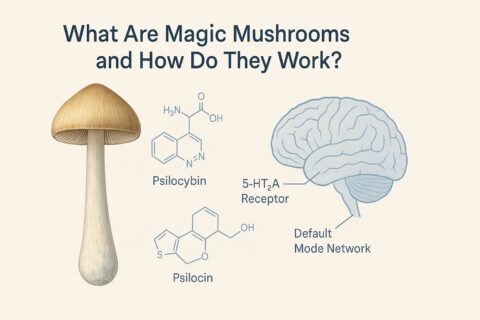
Magic mushrooms are a special type of fungus, primarily known for containing natural psychoactive compounds called psilocybin and psilocin. These chemicals can cause temporary changes in perception and thought. Not all mushrooms have these effects; the ones that do are sometimes called “magic” mushrooms. One of the most studied types in legal research is Psilocybe cubensis.
These mushrooms grow naturally in the wild or are cultivated in highly controlled environments that mimic their natural settings. In legal contexts, such as accredited research facilities, mycology students, and pharmaceutical labs, cultivation is done under extremely clean conditions to prevent contamination.
The Mushroom Life Cycle: From Spore to Fruiting Body
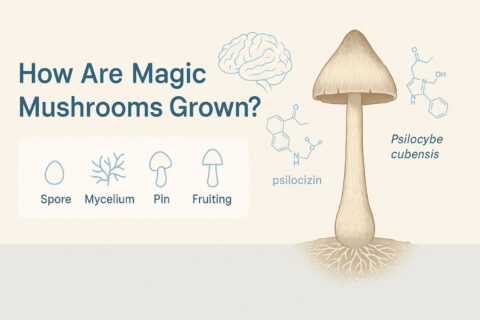
Magic mushrooms start from tiny reproductive cells called spores. Spores are microscopic and are released from the mushroom’s cap.
- Germination and Mycelium: When a spore lands on a suitable, nutrient-rich, warm, and damp medium (substrate), it germinates. The spore begins to grow thin, thread-like strands called hyphae. These threads connect to form a white, web-like structure known as mycelium. Mycelium is the main, vegetative body of the fungus, and it spreads below the surface, acting like the “roots” to absorb nutrients.
- Fruiting: When environmental conditions, such as temperature, moisture, and air quality, become favorable, the mature mycelium initiates the reproductive stage. It forms small knots, which quickly develop into tiny mushroom structures called pins. These pins rapidly grow into the recognizable, full-sized mushrooms that appear above ground, which is the final fruiting stage.
The Scientific Cultivation Process in Controlled Settings
Growing psilocybin-containing mushrooms in a controlled setting, such as a laboratory or authorized research facility, requires specialized expertise and sterile techniques. This process ensures the purity and consistency required for scientific study, clinical trials, or legal synthesis.
Research cultivation typically involves several key phases:
- Preparation of the Medium: The fungus requires a nutrient-rich base, or substrate, to grow. In research, this medium is carefully prepared, often consisting of sterile grains or specialized blends designed to mimic the natural food source. Sterilization is mandatory to eliminate competing bacteria or contaminants.
- Inoculation: Pure fungal spores or cultured samples are introduced into the sterile substrate in a highly clean and controlled environment. This step must be performed with great precision to prevent the introduction of airborne molds or bacteria, which can ruin the batch.
- Colonization and Incubation: The inoculated substrate is stored under controlled temperature and darkness. During this incubation period, the mycelium grows and spreads, fully integrating with and consuming the substrate. This stage ends when the mycelium has completely colonized the medium.
- Initiation of Fruiting: Once colonization is complete, the environmental controls are adjusted to signal to the mycelium that it is time to fruit. Researchers carefully manipulate conditions like temperature, light, and humidity to induce the formation of mushroom pins.
- Harvesting and Preservation: Mushrooms are harvested at the peak of their development for analysis. To preserve them for future study, they must be processed (e.g., dried) immediately after harvesting to maintain their chemical stability and integrity for subsequent research.
Legal and Safety Considerations
While the biology of Psilocybe cubensis is a subject of scientific interest, it is critical to understand its legal status.
Psilocybin is classified as a controlled substance in many jurisdictions, including Canada and the United States (at the federal level). This means that growing, possessing, or selling these mushrooms is illegal without specific, government-issued authorization, such as for approved clinical trials or scientific research programs.
The only safe and legal exploration of psilocybin is currently limited to participation in authorized clinical studies run by accredited institutions. Learning about the fungal life cycle is a valuable part of general biological education, but it is not a substitution for legal or medical advice.