If you’ve ever taken magic mushrooms or been around someone who has, you might wonder: “Will this show up on a drug test?” It’s a fair question, especially if you have a job screening coming up, or you’re part of a sports team or legal program that does regular testing.
The short answer? Magic mushrooms don’t usually show up on standard drug tests. But there are some rare cases where they can. This article explains how drug testing works, what kinds of tests are used, and why psilocybin, the active ingredient in magic mushrooms, isn’t usually part of the mix.
Most people taking a drug test will go through what’s called a standard panel test. These tests check for the most common illegal or controlled substances. You might hear terms like 5-panel, 10-panel, or 12-panel tests. They often screen for:
Psilocybin is not on these panels. In fact, around 95% of routine drug tests, whether for jobs, school, sports, or government, do not check for magic mushrooms at all.
But that doesn’t mean it’s impossible to detect.
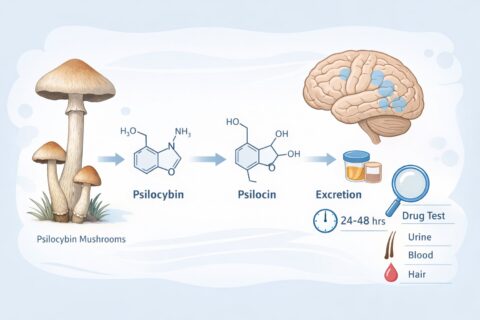
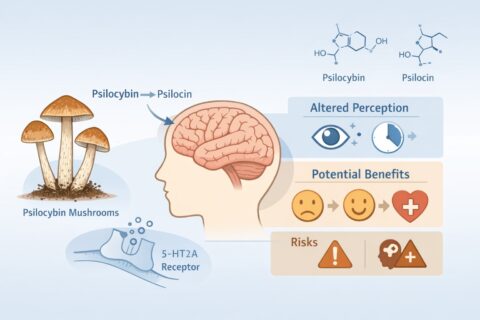
Labs can test for psilocin, which is the chemical your body turns psilocybin into. These tests are expensive and require special equipment like Gas Chromatography-Mass Spectrometry (GC-MS). They’re typically only used in:
In short, unless someone is specifically looking for psilocybin, it won’t be found.
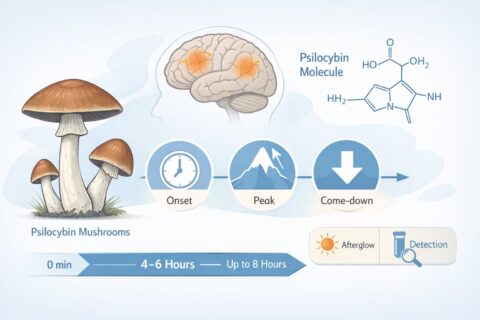
Even if someone does test for psilocybin, the window of detection is quite short. That’s because the body breaks it down and gets rid of it quickly.
Here’s how long different test types might detect it:
| Test Type | Detection Window | How Common It Is |
| Urine | 24–48 hours | Most common method for mushrooms |
| Blood | Less than 24 hours | Very rare |
| Saliva | Less than 24 hours | Extremely rare |
| Hair | Up to 90 days | Possible but expensive and uncommon |
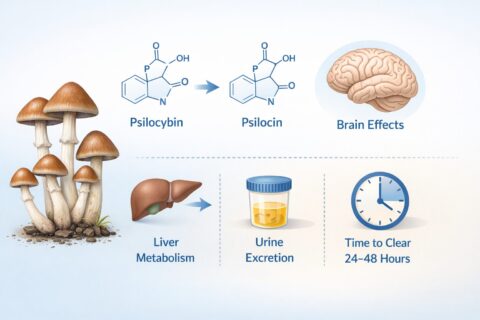
Urine is the most likely place psilocin might show up, but only for a short time. Most of it is gone from the system within a day.
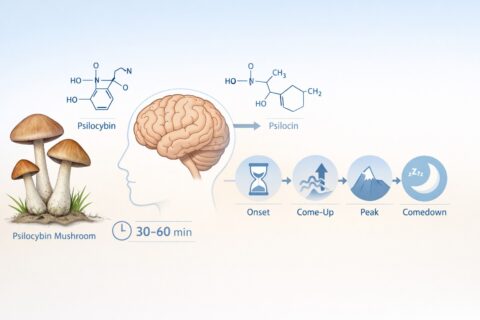
Understanding how the body handles magic mushrooms can help explain why they’re hard to detect.
Because it’s cleared out so fast, testing has to happen very soon after use; otherwise, it’s likely nothing will show up.
Even though the timelines above are average, they can change depending on the person and the situation. Here are some things that might affect how long psilocybin stays in the body:
So, while most people will be in the clear within 24–48 hours, these personal factors can make a difference.
False positives happen when a drug test shows a substance that wasn’t actually used. With psilocybin, false positives are extremely rare.
Standard drug tests use something called immunoassays, which look for specific drug markers. These tests don’t scan for psilocin, and nothing in mushrooms looks similar enough to confuse the test.
There are some claims that certain antidepressants or medications might affect specialised tests, but these situations are not common and haven’t been well proven in clinical studies.
So, in almost all cases, you won’t accidentally test positive for magic mushrooms.
There’s a lot of misinformation out there about magic mushrooms and drug tests. Let’s clear up a few popular myths:
This is not true. Psilocybin does not stay in your spinal cord or “hide” in your body. Once it’s metabolised and excreted, it’s gone.
Some people report “flashbacks,” but these are not caused by leftover psilocybin in the body. They are psychological and not related to drug storage.
Nope. Most mushroom coffees sold in Canada (like Lion’s Mane, Reishi, or Chaga) don’t contain psilocybin. They are legal, non-psychoactive, and safe for drug testing.
Even though magic mushrooms are hard to detect in standard tests, that doesn’t mean there are no risks.
Legal Risks: In Canada, psilocybin is still a Schedule III controlled substance. It’s illegal to produce, sell, or possess it without special permission through clinical trials or medical exemptions.
Workplace Risks: Some jobs have strict drug policies. If an employer has reason to suspect use, they might order a specialised test, especially in safety-sensitive roles like driving, operating heavy equipment, or working with children.
Medical Settings: In emergency rooms or during investigations, targeted tests might be used if psilocybin is suspected. But this is not common for routine checkups or employment.

© 2025 All rights Reserved.
Rocket Mushroom Shop

Are You 18 Or Over?
By clicking 'Continue', you confirm that you are over 18 years old. By using this website, you agree to our terms of service.