Magic mushrooms, also called psilocybin mushrooms, are gaining attention for their possible mental health benefits. But while science and interest grow, the laws about growing them remain strict in most parts of the world, including Canada. In this article, we’ll walk through what’s legal, what’s not, and why growing magic mushrooms is still risky, even in places where attitudes are starting to change.
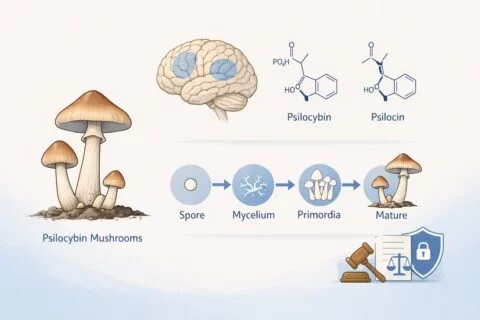
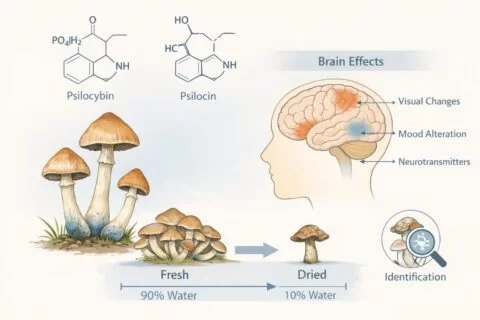
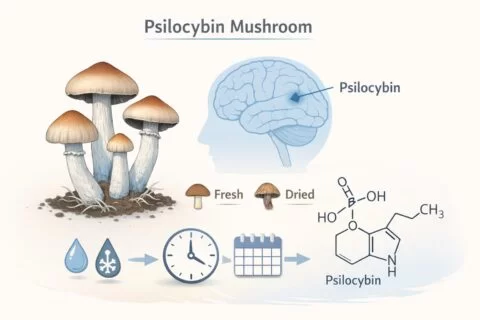
Magic mushrooms contain natural chemicals called psilocybin and psilocin. These chemicals can change how a person sees the world, feels emotions, and thinks. They are known as psychedelics. Some people believe they can help with anxiety, depression, and other mental health conditions. But because these effects can be strong, many governments have chosen to control them closely.
In 1971, countries around the world agreed to label psilocybin as a Schedule I substance. This happened through a UN treaty. A Schedule I substance is considered to have a high chance of misuse and no accepted medical use. This label still affects the laws of many countries today, even though modern science is starting to show that psilocybin might help some people.
That said, some countries have carved their own path. For example:
The U.S. has a complex system. There are three layers: federal, state, and local.
At the national level, psilocybin is a Schedule I controlled substance. Growing it is called “manufacturing” under the law, even if someone is growing it at home. Manufacturing a Schedule I drug is a federal felony, which can lead to serious jail time and fines.
There is one exception: spores. Spores don’t contain psilocybin, so they’re legal to sell in most U.S. states. But if they are used to grow mushrooms, that becomes illegal. Some states, California, Georgia, and Idaho, ban spores altogether.
A few states have started to change how they treat magic mushrooms:
Some cities have made psilocybin a low priority for police. This means people are unlikely to get arrested for small amounts. Cities like Seattle, Detroit, and Washington, D.C. have passed laws like this.
But here’s the key point: Decriminalization is not the same as legalization. The act is still illegal, just not enforced strongly by local police. Federal or state officials can still take action.
One part of psilocybin law that often confuses people is the spore loophole. Since spores don’t contain any psilocybin or psilocin, they are not banned by federal law in most places. That’s why spore kits are often sold for “microscopy” or “taxonomic study.”
But using those spores to grow mushrooms is a different story. If someone buys spores and a grow kit, that could be seen as “intent to manufacture,” which is a crime. Even having both items at the same time can raise red flags with law enforcement.
In short: Spores may be legal. Growing from them is not.
In Canada, psilocybin and psilocin are controlled substances under the Controlled Drugs and Substances Act (CDSA). This means growing, selling, or even having magic mushrooms is illegal, unless someone has special permission from the federal government.
Right now, Canada only allows legal access in very rare cases:
These paths are hard to get and are meant only for people who have tried all other treatment options. There’s no legal way to grow your own mushrooms in Canada, even for therapy.
Also, while some mushroom shops and websites claim to sell “legal” products, these are not approved by Health Canada. Selling magic mushrooms or promoting their use is not allowed under current law.
Laws about magic mushrooms are changing in some parts of the world, but they’re still strict in many places, especially when it comes to growing them. In Canada, growing magic mushrooms is illegal, with very few exceptions for medical research or serious health conditions.
In the U.S., the rules vary depending on where you are, but federal law continues to treat growing psilocybin mushrooms as a serious crime. Some states and cities are softening their approach, but that doesn’t make it fully legal.
If you’re curious about magic mushrooms, it’s important to understand the difference between what’s allowed and what isn’t. The laws are complex, and mistakes can lead to serious consequences. Always check the latest information from trusted sources before making any decisions.

© 2025 All rights Reserved.
Rocket Mushroom Shop

Are You 18 Or Over?
By clicking 'Continue', you confirm that you are over 18 years old. By using this website, you agree to our terms of service.