Magic mushrooms, also called psilocybin mushrooms, are gaining attention for their possible health benefits. But just like any substance that affects the brain, they may also carry risks. One concern some people have is whether these mushrooms can cause seizures. While seizures are rare, there is real scientific evidence that they can happen, especially in certain situations.
This article explains what we know so far about the connection between magic mushrooms and seizures, based on research, clinical studies, and reported cases. It’s not meant to scare you, but to give you the facts so you can better understand the risks, especially if you or someone you know has a seizure condition.
Seizures caused by psilocybin (the active compound in magic mushrooms) are not common. But they have been reported. In one study from the United States, poison control centres collected data from 2000 to 2016. Out of thousands of reported psilocybin exposures, only about 0.78% involved seizures. That’s less than 1 in 100 cases.
Another study looked at over 600 people who had used psychedelics like psilocybin. About 1.5% said they had a seizure. That’s about the same as the number of people in the general population who have epilepsy, which suggests that many of those seizures may have happened to people who already had a risk for them.
Also, in most clinical trials where psilocybin is studied as a treatment for depression or PTSD, people with a history of seizures are excluded. That means we still don’t know for sure how psilocybin might affect people with epilepsy or similar conditions in a controlled medical setting.
Not everyone faces the same risk. In healthy people with no medical conditions, the chance of having a seizure after taking magic mushrooms is very low. But for others, the risk goes up.
Here are some factors that increase the chance of a seizure:
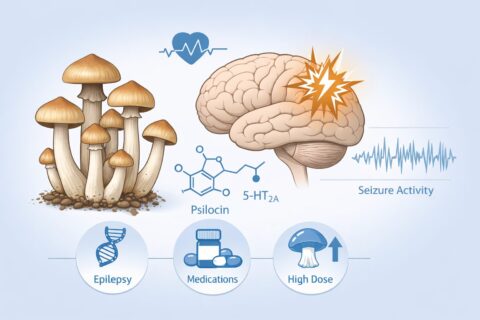
People who have epilepsy, or have a parent or sibling with epilepsy, should be especially careful. There was a case in 2023 where someone with refractory epilepsy (a form that doesn’t respond to treatment) had a confirmed seizure after taking about 2.5 to 3 grams of Psilocybe cubensis, a common type of magic mushroom. This was recorded using medical equipment and showed a real link.
Taking a very large amount of mushrooms, often called a “heroic dose”, puts more stress on the brain. People report more physical effects at these levels, and some of those include twitching, muscle shaking, or even convulsions. While microdoses are usually far below the threshold that causes seizures, large doses can increase the risk, especially in people already vulnerable.
Some medicines don’t mix well with psilocybin and can increase the chance of seizures. These include:
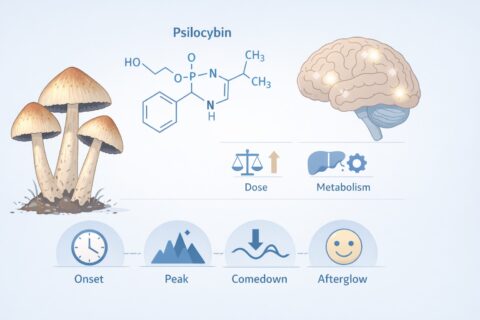
Understanding the brain science helps explain why seizures might happen in some cases. Psilocybin works by affecting serotonin receptors, especially one called 5-HT2A. These receptors help control mood, thinking, and awareness.
But too much activity at these receptors can cause the brain to become overstimulated. This is called excitotoxicity. In some people, especially those already at risk, this over-excitement could cause neurons (brain cells) to fire in ways that trigger a seizure.
Psilocybin also acts as a sympathomimetic, meaning it can raise heart rate and blood pressure. This increased stress on the body’s nervous system could contribute to a seizure, especially if other risk factors are already present.
Interestingly, low doses of psilocybin or psilocin may have anti-seizure effects in some animal studies. This may be due to activity at a different receptor called 5-HT1A. So, the connection between psilocybin and seizures is not simple; it depends a lot on the dose, the person, and what else is going on in the body.
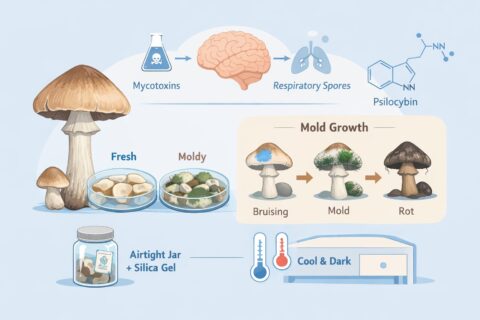
Sometimes the seizure might not even be from psilocybin. People sometimes eat mushrooms thinking they’re magic mushrooms, but they’ve picked the wrong kind. This is more common when mushrooms are gathered in the wild.
Here are two examples:
This is a deadly mushroom that looks similar to some types of magic mushrooms. It contains amatoxins, which can destroy the liver and kidneys, and cause serious symptoms like vomiting, confusion, and seizures.
You’ve probably seen this red mushroom with white spots in cartoons. It contains two chemicals: ibotenic acid and muscimol. These are not psilocybin but can cause shaking, muscle spasms, or even full seizures in large amounts. Amanita is sometimes sold as a legal psychedelic, but its effects and risks are very different from psilocybin mushrooms.
Here’s a simple chart to help summarize who’s most at risk:
| Factor | Level of Risk | Notes |
| General Population | Very Low | Seizures are rare in healthy individuals with no risk factors. |
| History of Epilepsy | High | Can cause a “breakthrough” seizure. |
| Taking Lithium | Extreme | Strong link with seizures when combined with psilocybin. |
| Taking Large Doses (5g or more) | Moderate | Higher risk due to stress on the nervous system. |
| Mixing With Tramadol or Stimulants | Moderate | These substances lower the seizure threshold. |
So, can magic mushrooms cause seizures? The answer is: yes, but rarely, and usually in people who already have a risk for seizures or take certain medications. If someone has epilepsy or takes drugs like lithium or tramadol, it’s important to understand these risks. Even though magic mushrooms are being studied for their possible mental health benefits, they’re still not legal for general use in Canada outside of approved clinical trials or special access programs.
As more research happens, we’ll learn more about who can safely use psilocybin and how to lower the risk of problems like seizures. Until then, knowing the facts and understanding your own health is the best way to stay informed and safe.

© 2025 All rights Reserved.
Rocket Mushroom Shop

Are You 18 Or Over?
By clicking 'Continue', you confirm that you are over 18 years old. By using this website, you agree to our terms of service.