Yes, magic mushrooms can get moldy, just like bread, fruit, or anything else that grows in nature. That might come as a surprise to some people, especially those who think drying mushrooms makes them last forever. But magic mushrooms are still organic material, and that means they can spoil under the right conditions.
Whether they’re fresh or dried, improper storage can lead to the growth of mould or bacteria. And unfortunately, it isn’t always easy to tell if a mushroom has gone bad. Some natural bruising on mushrooms can look like mould, and vice versa. That’s why it’s important to understand what signs to look for and how to keep mushrooms safe from contamination.
Let’s break it down in simple terms.
Fresh magic mushrooms, especially the type called Psilocybe cubensis, are made up of about 90% water. This makes them a perfect place for bacteria or fungi (another word for mould) to grow if they’re not stored properly. They’ll start to break down quickly if left out in a warm or damp place.
Even dried mushrooms aren’t totally safe from mould. That’s because mushrooms can absorb moisture from the air around them. This process is called “hygroscopy.” If mushrooms are not stored in a sealed, airtight container, they can slowly soak up humidity from the room. That rehydration gives mould a chance to grow, sometimes without you even realizing it at first.
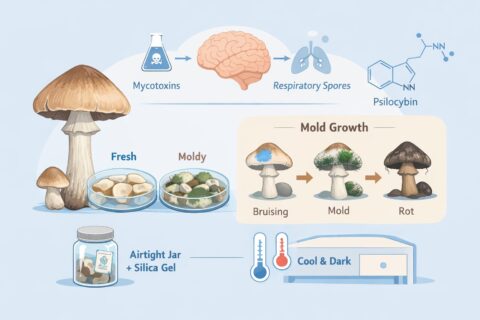
One of the hardest parts for beginners is knowing whether a spot on the mushroom is mould or just bruising. Bruising happens naturally with magic mushrooms. It’s a chemical reaction caused by handling, cutting, or exposure to oxygen. These bruises often show up as dark blue or bluish-green marks, which can look a little scary, but they’re usually harmless.
Mould, on the other hand, is a sign of contamination. It can make the mushrooms unsafe to eat. Here are a few easy ways to tell the difference:
There are a few types of contamination that pop up often, especially if the mushrooms were grown or stored in a humid place.
If you see any of these signs, it’s best not to take risks.
Eating mouldy magic mushrooms can be very dangerous. This isn’t just about having a “bad trip.” It’s about what mould and bacteria can do to your body.
Simply put, the risks aren’t worth it.
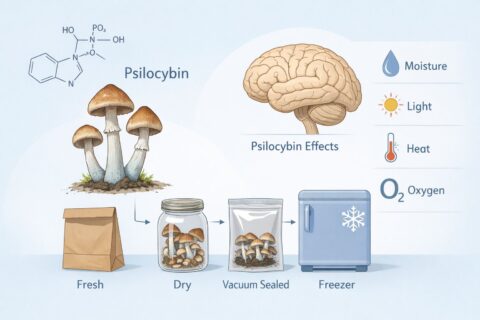
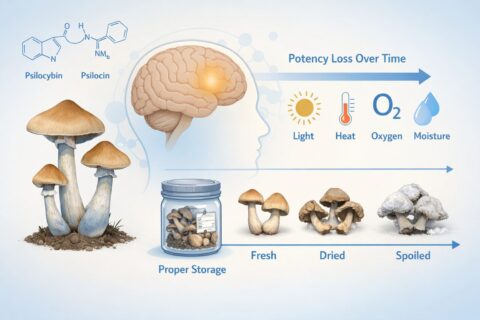
The best way to avoid mould is to control three things: moisture, light, and heat. These are the three enemies of mushroom storage.
By following these steps, it’s possible to reduce the risk of contamination, but no method is 100% perfect. Always check before using.
There’s a saying among mushroom growers and users: “When in doubt, throw it out.” That advice is more than just a rule of thumb; it’s a safety measure.
Mould grows in networks called mycelium, which are often invisible to the human eye. If you can see mould on one part of a mushroom, it probably means the spores or threads have already spread inside. Cutting off the bad-looking bit doesn’t solve the problem.
This isn’t like cheese, where you can trim off a mouldy corner and eat the rest. With mushrooms, once the contamination starts, the whole product is likely unsafe.
Magic mushrooms are part of nature, and like anything natural, they can go bad. Whether you’re someone who’s simply curious about them or someone with experience, it’s important to treat them with care and caution. Mould isn’t just a sign of spoilage; it’s a real health risk. Knowing how to spot it and how to prevent it can help protect your well-being and peace of mind.
Storing mushrooms properly is not complicated, but it does take a little attention. Keep them dry, sealed, and in a cool place. And if you’re ever unsure whether they’re still good, the safest choice is to let them go.
Your health is always more important than saving a few grams.

© 2025 All rights Reserved.
Rocket Mushroom Shop

Are You 18 Or Over?
By clicking 'Continue', you confirm that you are over 18 years old. By using this website, you agree to our terms of service.