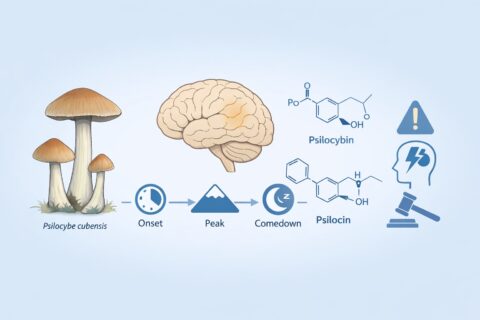
Magic mushrooms, also known as psilocybin mushrooms, grow in many parts of the world. They don’t all look the same, and they don’t all grow in the same places. But they do have some things in common. These mushrooms need specific types of food, moisture, and temperatures to grow. Some prefer warm tropical climates, while others like cooler, rainy places.
Even though they grow naturally, magic mushrooms are not legal to use or pick in most areas, including much of Canada. This article explains where they grow, how they survive, and what to know if you’re just curious about nature.
There are over 200 known species of magic mushrooms. You can find them on every continent except Antarctica. Here are some key places where they naturally grow:
Each of these regions has different species, depending on the local weather and environment.
Scientists group magic mushrooms by what they grow on. Most of them fall into three categories: dung-lovers, grass-lovers, and wood-lovers.
These mushrooms grow on or near the dung (manure) of animals like cows or horses.
You’ll often find these mushrooms in open fields where cattle roam. They’re especially common in parts of Mexico, South America, and Southeast Asia.
These mushrooms grow in grassy places like meadows and lawns, especially those that haven’t been fertilized with chemicals.
They don’t grow directly on dung, but they do like pastures where animals graze. The grass roots provide the nutrients they need.
These mushrooms grow on decaying wood, mulch, or wood chips. Some even show up in city parks or garden beds.
Wood-loving species are some of the most powerful. They’re also some of the most likely to be confused with poisonous mushrooms.
Mushrooms don’t grow year-round. They need the right conditions to appear, and they’re quite sensitive to changes in their environment.
That’s why you often see mushrooms after several days of rain followed by a cool, cloudy day.
Here are the most well-known types of magic mushrooms and what makes them easy (or hard) to spot.
Some people think they can identify magic mushrooms just by looking for ones that turn blue or grow on dung. This is not safe.
One of the biggest dangers in mushroom hunting is mistaking a toxic mushroom for a magic one. For example:
Even experienced foragers can make mistakes. That’s why experts often say: “If in doubt, throw it out.”
Even if magic mushrooms grow in your backyard or a nearby field, that doesn’t make them legal to pick or use.
In Canada, psilocybin is listed as a Schedule III drug under the Controlled Drugs and Substances Act. That means it’s illegal to possess, sell, or grow, except for scientific or medical research approved by Health Canada.
Some cities and U.S. states, like parts of Oregon or Colorado, have made steps toward allowing supervised or therapeutic use. But even in those places, personal use is still tightly controlled, and commercial sales are mostly banned.
Magic mushrooms are fascinating. They grow in all kinds of climates, from cow fields to city parks. They’re part of nature’s complex system of recycling and soil health. But they’re also powerful substances that can be dangerous if mistaken for toxic look-alikes or used without proper understanding.
For anyone interested in mushrooms, it’s important to learn from safe, trusted sources. If you’re curious about the science behind these fungi, many universities and medical researchers are now studying them in carefully controlled environments.
Magic mushrooms may grow freely in nature, but our understanding and our laws are still catching up.

© 2025 All rights Reserved.
Rocket Mushroom Shop

Are You 18 Or Over?
By clicking 'Continue', you confirm that you are over 18 years old. By using this website, you agree to our terms of service.