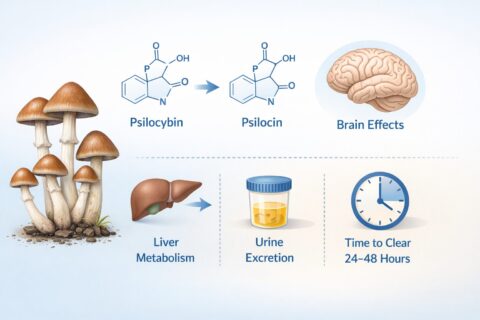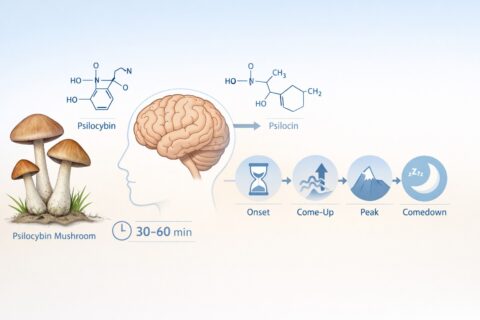
Magic mushrooms, also called psilocybin mushrooms, are known for their strong effects on the mind. People who use them may experience changes in how they see, think, or feel. But what happens if someone tries to sleep while under the effects of magic mushrooms? The short answer is: it’s very hard. For most people, sleeping while “tripping” is nearly impossible until the effects begin to wear off.
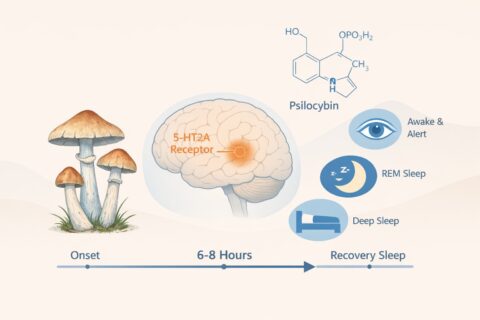
Psilocybin, the main compound in magic mushrooms, interacts with the brain in a way that increases activity. It works with serotonin receptors, especially one called the 5-HT2A receptor.
When this happens, the brain becomes very alert. Some scientists call this “cortical arousal,” which just means the brain is wide awake and full of activity. Instead of winding down for rest, your brain is busy processing colours, ideas, emotions, and sometimes strange visuals. This makes it extremely hard to fall asleep.
Physically, many people also feel what’s called a “body high.” This can feel like buzzing in the muscles, tension, or energy moving through the body. It’s not painful, but it makes it harder to relax. Lying still might feel uncomfortable. Because of this mix of mental and physical energy, sleep usually doesn’t come until the trip is almost over.
Even when someone finally falls asleep, often 6 to 8 hours after taking a full dose, sleep isn’t quite the same. Scientists have found that psilocybin can change the way sleep works in the brain.
For example, it can delay the start of REM sleep, the part of sleep where dreaming happens. But once a person gets to REM, their dreams may be more intense or emotional than usual. Some people report very vivid or strange dreams after a trip.
Interestingly, deep sleep (called Slow Wave Sleep) might increase the night after a trip. This is the kind of sleep that helps your body recover and feel rested. So while falling asleep is hard at first, the sleep you get after the trip can sometimes be deeper.
One thing that surprises some people is what happens when they try to rest with their eyes closed. It’s not like normal sleep. Instead of seeing darkness, many people see bright patterns, moving shapes, or what feels like little movies playing behind their eyelids. These are called closed-eye visuals, or CEVs.
This may feel like dreaming, but the person is still awake. They may be lying down, calm, and quiet, but the brain is still very active. This can be interesting or relaxing for some, but for others, it makes sleep feel even farther away.
Trying to sleep before the effects wear off is not just hard; it can also be stressful. One common experience is getting stuck in a thought loop. This means a person keeps thinking the same thing over and over, often in a way that feels confusing or overwhelming. If they’re trying to force sleep, they might get frustrated or anxious, which makes it worse.
In some cases, a person might fall asleep briefly but have nightmares or night terrors. This can happen especially during difficult or emotional trips. The brain tries to process strong feelings, and that can lead to dark or unsettling dreams.
There’s also something called the “hangover effect“, not from alcohol, but from emotional and mental strain. After a trip with little or no sleep, a person might feel very tired the next day, both in their body and their emotions. This can lead to mood swings, sadness, or just feeling off.
For those looking to rest after a psilocybin experience, timing is everything. A good rule is the “8-hour window”. If you want to sleep at 10 p.m., for example, the trip should start no later than 2 p.m. This gives your brain time to process the experience and begin calming down.
The setting also matters. Keeping the lights low, the room cool, and using something comforting like a weighted blanket can signal to your body that it’s time to rest. Some people call these “low-fi” triggers, small changes that help the nervous system shift from alert to relaxed.
Avoiding caffeine is also smart. Since psilocybin already increases alertness, adding another stimulant like coffee or energy drinks makes sleep even harder.
Natural aids can help the body relax after a trip. Some people use magnesium glycinate, a calming mineral, or herbal teas like chamomile or lemon balm. These don’t stop the trip, but they may ease muscle tension and help prepare for rest.
Sleep and psilocybin don’t mix well, but how badly they mix depends on the dose.
With a macrodose (about 2 grams or more), sleep is usually off the table for 4 to 6 hours. During this time, the brain and body are too active to rest.
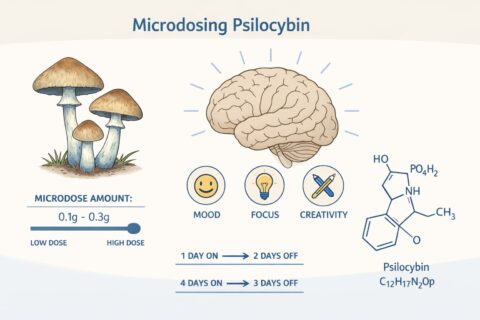
With a microdose (around 0.1 to 0.3 grams), most people don’t notice much impact on sleep. These small doses are often used during the day, and they don’t cause the strong visuals or emotional waves that bigger doses do. However, some people still report more vivid dreams, and taking a microdose too late in the afternoon can lead to trouble falling asleep, especially for people who are sensitive to stimulants.
So, can you sleep with magic mushrooms? For most people, the answer is no, at least not right away. Psilocybin keeps your brain too busy and your body too alert for natural sleep to happen. Even when sleep does come, it may be different from usual, with more intense dreams or deep recovery sleep.
If someone is planning a trip, it’s wise to think ahead about sleep and recovery. Giving the body time to come down, using a calm setting, and avoiding extra stimulants can make a big difference. Sleep may not come easily, but with patience and care, rest can follow.

© 2025 All rights Reserved.
Rocket Mushroom Shop

Are You 18 Or Over?
By clicking 'Continue', you confirm that you are over 18 years old. By using this website, you agree to our terms of service.