Magic mushrooms have been used for thousands of years in spiritual and cultural ceremonies. Today, people are more curious than ever about how they work and what they feel like. While some use them in clinical research or for personal reflection, it’s important to understand both the effects and the risks. This article explains what happens in the brain, what the experience feels like, and why each person’s experience can be so different.
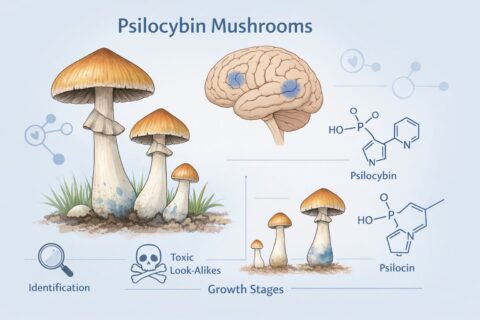
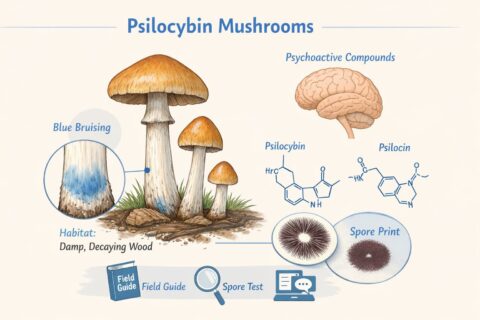
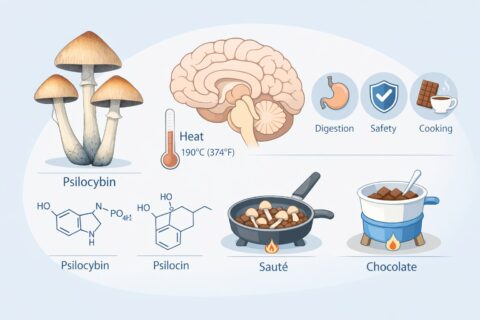
The main ingredient in magic mushrooms is a natural chemical called psilocybin. When someone eats a magic mushroom, their body turns psilocybin into psilocin. This is the substance that causes the mental and physical effects.
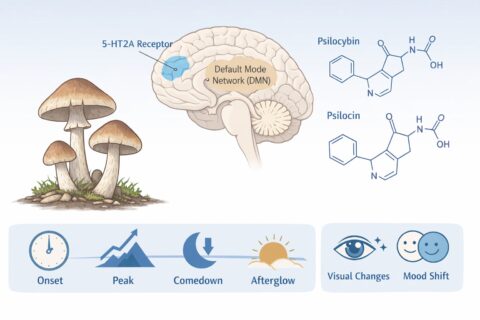
Psilocin is shaped a lot like serotonin, a brain chemical that helps control mood, sleep, and how we feel pain. Because of this similarity, psilocin fits into some of the same “receptors” in the brain, especially something called the 5-HT2A receptor. This changes how parts of the brain communicate.
One of the most important areas affected is called the Default Mode Network (DMN), which is responsible for our regular thinking patterns and sense of self. When the DMN quiets down, the brain becomes more open. Thoughts, feelings, and memories that don’t usually connect can suddenly come together. This leads to the feeling of expanded awareness or a shift in consciousness.
A magic mushroom trip usually lasts 4 to 6 hours, though some people feel effects for longer. The experience often follows a few clear stages:
This is when the effects first begin. Some people feel nervous or excited. They might get the “giggles,” feel butterflies in their stomach, or notice that colours seem brighter.
This is when things start to intensify. People may see moving patterns, shapes, or colours, even with their eyes closed. Emotions can swing suddenly, and the body might feel either heavy or light.
This is the most intense part of the experience. Time may feel stretched or meaningless. Some people say they feel a deep connection to nature or the universe. Others might feel like their sense of “self” has faded away. These feelings can be joyful, overwhelming, or confusing, depending on the person.
The effects slowly fade. Many people feel tired but thoughtful. They may want to be alone or write down what they experienced.
Some report feeling calm, more focused, or emotionally clear the next day. This is sometimes called the “afterglow.”
One of the most noticeable parts of a magic mushroom experience is how it changes the senses.
Magic mushrooms can cause strong emotional shifts, both positive and negative.
Not every experience is positive, though. Some people feel trapped in loops of negative thoughts. They might become paranoid or feel like they’re “going crazy.” These feelings usually pass, but can be very uncomfortable while they last.
Although most of the effects are in the mind, the body also reacts to psilocybin.
One of the most important things to know is that the way someone feels on magic mushrooms depends a lot on their set and setting.
Because of how much set and setting matter, no two trips are the same, even for the same person.
Yes, there are important risks to know about.
The way magic mushrooms make someone feel is deeply personal. Some people describe the experience as life-changing or healing. Others find it confusing or upsetting. The brain’s chemistry, the person’s mindset, the environment, and the dose all shape how the trip unfolds.
Researchers are continuing to study psilocybin, especially in controlled clinical settings. While some results show promise for mental health treatment, these are still early days, and the legal and medical systems are cautious.
Understanding how magic mushrooms affect the mind and body is an important step toward making informed decisions. Whether someone is curious about the science, the experience, or the risks, clear and honest information can help them navigate the topic with respect and care.

© 2025 All rights Reserved.
Rocket Mushroom Shop

Are You 18 Or Over?
By clicking 'Continue', you confirm that you are over 18 years old. By using this website, you agree to our terms of service.