Mushrooms are all over the place, on forest floors, in grassy fields, and sometimes even on your lawn. But not all mushrooms are the same. Some are edible, some are poisonous, and a few contain special compounds that affect the mind. These are often called “magic mushrooms.”
So, how can someone tell if a mushroom might be magic? This guide explains what to look for, what to avoid, and how to stay safe and informed.
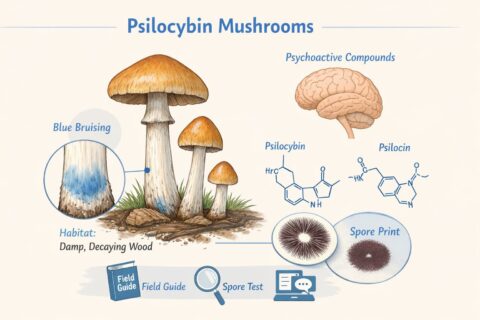
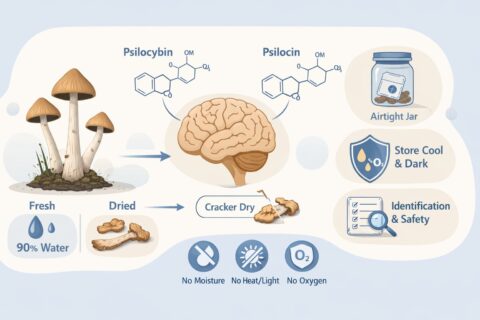
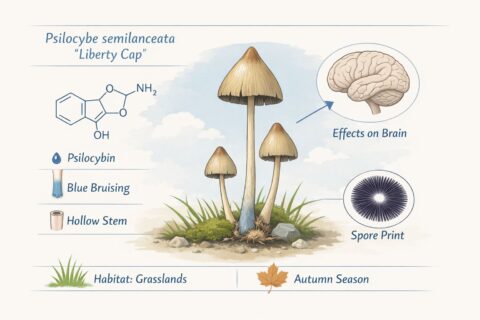
The term “magic mushroom” usually refers to wild mushrooms that contain psilocybin and psilocin. These are natural chemicals that can affect the brain. They’re found in more than 100 species of mushrooms, but most belong to a group called Psilocybe.
These mushrooms often grow in damp places that are rich in nutrients, such as:
It’s important to know that many mushrooms in nature can look similar. That’s why proper identification is key.
There’s no single feature that proves a mushroom is “magic,” but many psilocybin mushrooms share some common traits.
One of the clearest signs is called “blue bruising.” If the mushroom is pressed or damaged, the stem or cap might turn bluish or teal. This happens because the psilocin reacts with oxygen. It’s not a guarantee, but it’s a strong clue.
Each mushroom species leaves a different colour of spores, kind of like a fingerprint. To test this, you can cut off the cap and place it gills-down on a piece of white paper. After a few hours, the spores will fall and leave a print. Most magic mushrooms leave a dark purplish-brown to black spore print.
Many Psilocybe mushrooms have hygrophanous caps. This means the cap changes colour as it dries. When wet, it might look dark brown, but as it dries, it fades to a light tan or yellowish colour.
Some species have a thin, slippery film on the cap. When the mushroom is fresh, this outer layer can be peeled off like a skin. It’s called a gelatinous pellicle and is often found in psilocybin mushrooms. These signs don’t confirm a mushroom is magic, but they’re helpful clues when used together.
Some species of magic mushrooms are more common than others. If someone is trying to learn how to identify them, it’s useful to start with the three most well-known types.
This is one of the most recognized types worldwide.
This is one of the oldest known magic mushrooms.
This mushroom grows in urban and forested areas.
These species can be found in different parts of the world, depending on the climate and local habitat. Even though they look different, they all have the blue bruising trait and similar spore colours.
This is the most important part of learning about mushrooms. Some dangerous species can look almost exactly like magic mushrooms, but they can make you very sick or even be deadly.
These mushrooms can fool even experienced foragers. That’s why experts stress: if you’re not 100% sure, don’t touch it.
There’s no single test that proves a mushroom is psilocybin-containing. Most people who study mushrooms use a mix of tools and methods to stay safe and accurate.
As mentioned before, this is a simple way to check the spore colour. It can help rule out look-alikes. A black or purple-brown spore print is common for Psilocybes. If it’s green or rusty brown, it’s probably not what you think it is.
There are books and websites with photos and details about mushrooms found in each region. A good field guide will include clear pictures, habitat descriptions, and warning signs for toxic species. In Canada, it’s best to use one that covers your province, since the species vary across the country.
Websites like iNaturalist or MushroomObserver let people upload photos and get feedback from experts. While these tools can be helpful, they aren’t always fast or 100% reliable. Still, they’re a great way to learn and connect with others.
Learning about mushrooms can be exciting, especially when exploring forests or grassy fields. But psilocybin mushrooms can be tricky to identify. Many of them share features with dangerous or even deadly mushrooms. That’s why it’s so important to know what to look for and what to avoid.
Magic mushrooms are a part of nature, science, and history, but telling them apart from the rest takes care, patience, and the right knowledge.

© 2025 All rights Reserved.
Rocket Mushroom Shop

Are You 18 Or Over?
By clicking 'Continue', you confirm that you are over 18 years old. By using this website, you agree to our terms of service.