canada flag

What Are Magic Mushrooms Called?

If you’ve ever heard someone talk about “magic mushrooms,” you might wonder what exactly they mean, and what these mushrooms are really called. The truth is, there isn’t just one name. Depending on the setting, who’s talking, and the reason they’re talking about them, magic mushrooms can go by many different names.

Some names are scientific, used by researchers and scientists. Others are casual or cultural. Some are even based on looks or where they grow. In this article, we’ll walk through the many names magic mushrooms are known by, and why they matter, especially in a world where interest in psychedelics is growing, but laws and safety rules are still strict.

Scientific Names: What Experts Call Them

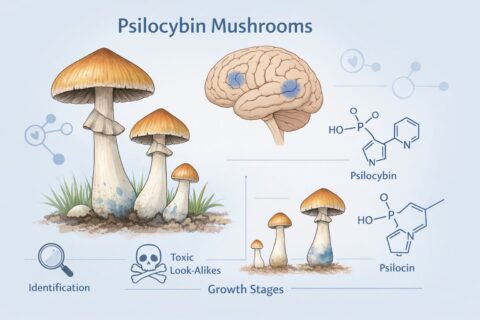
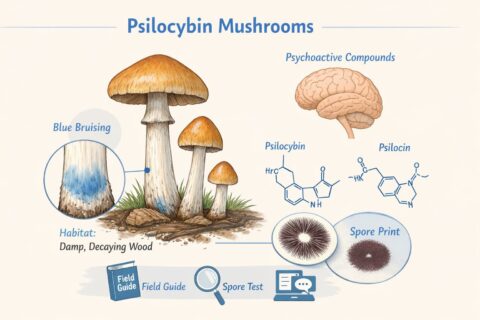
In science, mushrooms that contain the active compound psilocybin belong to a group of fungi with over 200 species. These are usually named by their genus and species, the Latin naming system used for all living things. The most common genus for magic mushrooms is Psilocybe.

Here are some of the better-known species:

  • Psilocybe cubensis
    This is probably the best-known species. It’s the kind most people mean when they say “magic mushrooms.” It’s often grown indoors and is popular with hobby growers.
  • Psilocybe semilanceata
    Often called Liberty Caps, these grow in the wild in places like Canada, the UK, and the Pacific Northwest. They have small, bell-shaped caps.
  • Psilocybe cyanescens
    Known as Wavy Caps because of the rippled shape of their tops. They grow in cool, damp areas, often near wood chips.
  • Psilocybe azurescens
    These mushrooms are known for being very strong. They’re found naturally in the Pacific Northwest.

Even though they’re all “magic mushrooms,” the species can vary a lot in strength, appearance, and where they grow.

Street Names and Slang Terms

In casual conversations or in places where these mushrooms are talked about underground, people often use slang. These names are usually shorter and easier to remember. Some help avoid attention, especially in places where the mushrooms are still illegal.

Common street names include:

  • Shrooms – The most widely used nickname.
  • Mushies – Popular in the UK and Australia.
  • Blue Meanies – A term for strong mushrooms that bruise blue. (Sometimes it refers to a specific species: Panaeolus cyanescens.)
  • Liberty Caps – Another name for Psilocybe semilanceata.
  • Gold Caps – Usually refers to Psilocybe cubensis because of their golden tops.
  • Philosopher’s Stones – A name used for sclerotia, a type of underground mushroom truffle that also contains psilocybin.

Slang changes over time and place, but these are some of the most common ones you’ll hear.

Cultural and Traditional Names

Long before these mushrooms were part of modern science or casual conversation, they were used in Indigenous ceremonies. In parts of Central and South America, magic mushrooms have been part of spiritual life for thousands of years.

Some of the names used in these traditions include:

  • Teonanácatl – A word from the Nahuatl language (used by the Aztecs), meaning “Flesh of the Gods.”
  • Los Niños Santos – Spanish for “The Holy Children.” This name was used by Maria Sabina, a Mazatec healer who shared her knowledge with the outside world.
  • Little Flowers – A poetic nickname used by Indigenous groups in Mexico.

These names show how deeply connected these mushrooms are to cultural history and traditional healing, not just their effects.

Strain Names: The Hobbyist Terms

People who grow or study mushrooms often use names for different strains of Psilocybe cubensis. These strains are like different types or “brands” of the same species. They can have slightly different colours, shapes, or effects.

Some popular strain names include:

  • B+ – Known for being beginner-friendly and adaptable to different growing conditions.
  • Golden Teacher – Has a gold-coloured cap and is often said to produce more “insightful” experiences.
  • Penis Envy (PE) – A unique strain that looks unusual and is known for its high strength.
  • Albino A+ – A version of P. cubensis that lacks pigment, making the mushrooms appear white.

These names are often chosen by growers and passed along in online communities or forums.

Modern Scientific and Clinical Terms

As research into psychedelic therapy grows, some of the language around these mushrooms has become more technical or formal.

Here are a few terms you might see in news articles or research papers:

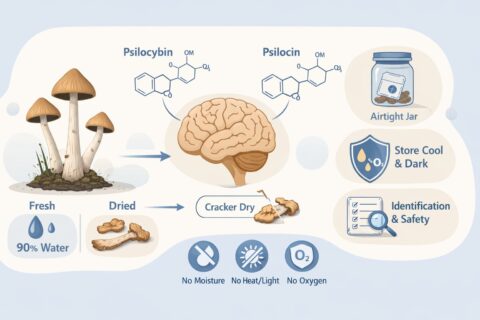
  • Psilocybin – This is the main active ingredient in magic mushrooms. It turns into psilocin in the body, which affects the brain.
  • Entheogen – A word that means “bringing forth the divine within.” It’s often used to describe plants or fungi used in spiritual settings.
  • Psychedelic – From Greek roots meaning “mind manifesting.” A general term for substances that change how people think or feel.
  • Hallucinogen – An older medical term for substances that cause changes in perception.

These words are used in studies, therapy settings, or in legal discussions. They’re part of a shift toward more professional and careful language.

Why Names Matter

Knowing the different names of magic mushrooms isn’t just interesting; it’s also important. Here’s why:

  • Safety: Some mushrooms look a lot like magic mushrooms but are highly toxic. For example, Galerina marginata can be deadly, and it’s often mistaken for Psilocybe species. That’s why proper identification and naming are key.
  • Strength and effects: Different species and strains can vary in strength. Some are mild, while others are much more powerful. For people involved in scientific research or clinical trials, knowing the exact name helps with dosage and safety.
  • Legal reasons: In Canada, psilocybin mushrooms are still considered illegal at the federal level, unless a person has special medical permission. The same goes for most places in the U.S. Some states or cities have started to decriminalize certain uses, but these changes are local and often limited. Because of that, naming and classification can play a role in legal or policy discussions.

The Many Names, One Fascinating Fungus

So, what are magic mushrooms called? It turns out they go by many names. Some are scientific, others are slang. Some come from deep cultural traditions, while others were made up by modern growers. All of them tell part of the story.

No matter what name you use, whether it’s Psilocybe cubensis, Liberty Caps, or Golden Teacher, understanding the language helps you stay informed, stay safe, and respect the long history behind these unique mushrooms.

Leave a Reply

Your email address will not be published. Required fields are marked *

Latest Blogs