Drying magic mushrooms is an important step if you want to store them safely for a long time. Fresh mushrooms may look fine for a few days, but they spoil quickly because they are mostly water. This guide is written for educational and mycological purposes only. Drying mushrooms is a common preservation method used in research, taxonomy, and specimen storage. Laws around psilocybin vary by location, and it’s your responsibility to understand and follow local regulations before handling any restricted fungi.
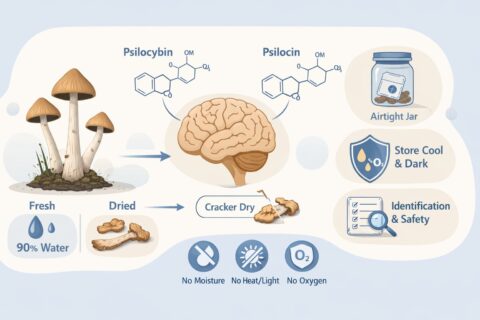
Fresh mushrooms contain a lot of water, close to 90 percent. Because of this, they spoil very quickly. Within a few days, moisture can cause mould growth or internal rot, even if the mushroom looks fine on the outside.
Drying removes that moisture and slows down decay. This makes dried specimens easier to store, study, and preserve over time.
Drying helps by:
A common drying standard in mycology is called “cracker dry.” This means the mushroom is completely dry and snaps cleanly when bent, like a dry twig or cracker.
If a stem bends or feels leathery, there is still moisture inside. Mushrooms that aren’t fully dry can trap water in the centre, which may lead to mould later on, even in sealed containers.
There are a few ways to dry mushrooms. Some are more reliable than others, especially in humid climates.
A food dehydrator is designed to remove moisture slowly and evenly. This makes it one of the safest and most consistent tools for drying fungi.
Basic guidelines:
Lower heat helps protect delicate compounds and prevents overheating.
If a dehydrator isn’t available, air drying can work in dry environments.
How to do it:
This method often removes surface moisture but may not fully dry thicker stems. If mushrooms still bend, another drying step is needed.
A desiccant chamber helps remove leftover moisture after air drying or partial dehydration.
You’ll need:
Steps:
This final step helps achieve a true cracker-dry result.
Some methods can damage mushrooms or create safety risks.
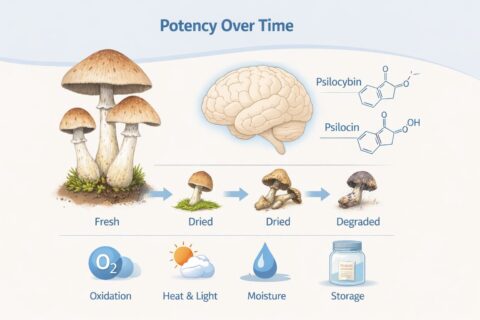
Once mushrooms are fully dry, storage becomes the next priority. Poor storage can undo all your drying work.
Four things cause damage during storage:
These are often called the four main causes of degradation.
| Storage Item | Why It Helps |
| Glass jars | Airtight and non-reactive |
| Silica packets | Absorb leftover moisture |
| Oxygen absorbers | Reduce oxidation over time |
| Cool, dark space | Slows breakdown |
Avoid plastic bags. They allow air exchange and can trap moisture.
A cupboard or drawer works well. Refrigeration isn’t needed and can introduce moisture if containers aren’t sealed perfectly.
Drying mushrooms is about preservation and safety, not speed. Rushing the process or using high heat can ruin a specimen that took time to grow or collect.
Whether you’re studying fungi, preserving samples, or learning basic mycology skills, the goal stays the same: remove moisture completely, store carefully, and avoid shortcuts.
With patience and the right methods, dried mushrooms can remain stable for months or longer without mould or decay.

© 2025 All rights Reserved.
Rocket Mushroom Shop

Are You 18 Or Over?
By clicking 'Continue', you confirm that you are over 18 years old. By using this website, you agree to our terms of service.