Magic mushrooms, also called psilocybin mushrooms, are being studied around the world for their possible benefits in mental health, creativity, and personal growth. But even though they come from nature, that doesn’t mean they’re risk-free, or that you can take them often without consequences.
One of the most important questions people have is: how often is it safe to use magic mushrooms?
Whether someone is interested in science or just curious about the topic, this article explains what researchers know about how psilocybin works in the body, how often it might be used safely, and what risks are involved when it’s taken too often.
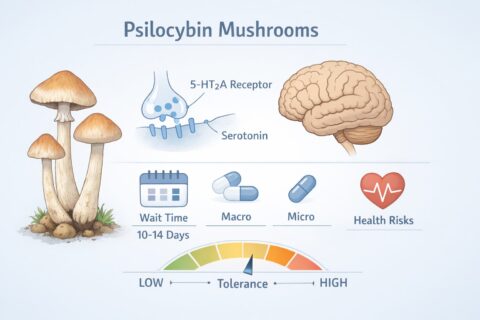
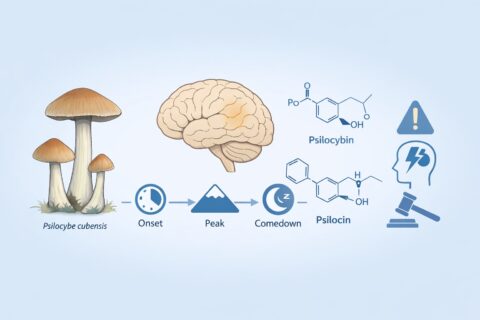
When someone takes magic mushrooms, the main active ingredient, psilocybin, affects special receptors in the brain called serotonin 5-HT₂A receptors. These are linked to mood, awareness, and perception.
After a strong dose (often called a “macrodose”), these brain receptors quickly become less sensitive. This is known as tolerance. Because of this, if someone tries to take mushrooms again the next day or even a few days later, the effects will be much weaker. Some studies show the second dose would need to be nearly twice as strong to feel the same, and even then, the experience may not be as clear or meaningful.
Experts say the brain usually needs about 10 to 14 days to reset after a macrodose. That means it’s not recommended to take large amounts of psilocybin more than once every two weeks.
How often someone might use magic mushrooms also depends on the amount they take and the reason why.
Macrodosing is when someone takes a full dose that causes strong effects. This might include visual changes, emotional breakthroughs, or deep reflection. These experiences can be powerful, but they also take a toll on the mind and body. That’s why most people who use mushrooms for spiritual or therapeutic reasons only do it once every month or even once every few months. This gives the brain time to rest, and it also helps the person process what they felt or learned.
Taking macrodoses too often can cause problems. Some people report feeling emotionally drained, disconnected from reality, or even more anxious than before. Overdoing it may reduce the positive effects and increase confusion, stress, or other mental health struggles.
Microdosing, on the other hand, means taking a very small amount, usually too little to feel any trippy or hallucinogenic effects. People who microdose say it helps them feel more focused, creative, or calm in their daily lives. But even though it’s a smaller dose, doing it too often can still lead to tolerance or other long-term risks.
To avoid this, most microdosing schedules include regular breaks. Two common plans are:
These patterns are designed to give the brain time to adjust and avoid building up tolerance.
Even though psilocybin is seen as having low physical toxicity, that doesn’t mean it’s risk-free, especially if used often.
One rare but serious condition is called HPPD, which stands for Hallucinogen Persisting Perception Disorder. This causes people to keep seeing visual effects, like flashes, snow, or trails, even long after the drug has worn off. It’s more likely to happen in people who use psychedelics too often, though it’s still uncommon.
There’s also the risk of psychological fatigue. When someone takes mushrooms, especially in large amounts, their brain goes through a lot. Thoughts and emotions can feel intense. Afterwards, the brain needs time to “integrate” the experience, which means making sense of what happened and returning to a calm state. If someone keeps taking mushrooms without enough space between, it may lead to feelings of being disconnected, numb, or confused.
Some early research also raises questions about long-term heart health. There’s a concern that microdosing very frequently, over many years, might affect the valves in the heart due to the way psilocybin interacts with 5-HT₂B receptors. So far, this has mostly been seen in animal studies, and more human research is needed. But it’s one more reason to be careful and avoid overuse.
Here’s a simple breakdown of how often psilocybin might be used in different ways, based on research and safety guidance:
| Use Type | Suggested Frequency | Why |
| Therapeutic or Spiritual | Once every 1 to 3 months | Allows time to reflect and prevents mental overload |
| Recreational | No more than once every 2 weeks | Gives the brain time to reset and avoids tolerance |
| Microdosing | 2 to 4 times per week (with breaks) | Keeps the benefits without building up resistance |
It’s important to understand that more is not always better. Even when people have good reasons, like wanting to manage anxiety or boost creativity, using mushrooms too often can have the opposite effect.
Magic mushrooms are complex. They interact with the brain in ways that researchers are still trying to fully understand. While some early studies suggest benefits in controlled settings, using them too often can lead to problems with tolerance, mental health, or physical well-being.
For anyone curious about psilocybin, the best approach is to stay informed, follow scientific research, and give the brain time to rest and recover between uses. There’s still a lot to learn, but respecting the power of these substances is a good place to start.

© 2025 All rights Reserved.
Rocket Mushroom Shop

Are You 18 Or Over?
By clicking 'Continue', you confirm that you are over 18 years old. By using this website, you agree to our terms of service.