

Many people are curious about magic mushrooms, especially how they work in the body. One big question that often comes up is: Can you build a tolerance to them? The short answer is yes, and it can happen surprisingly fast. Let’s break down how this works in a way that’s easy to understand, even if you’re not a scientist.
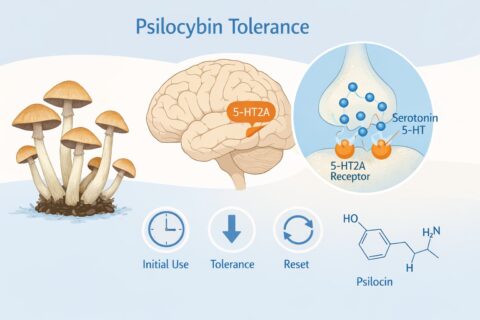
When someone takes magic mushrooms, the active ingredient is called psilocybin. After it’s eaten, the body turns it into a substance called psilocin. Psilocin affects the brain by attaching to something called serotonin receptors, especially a type called 5-HT2A. These receptors play a big role in how we feel, think, and even dream.
But here’s the thing: if you overstimulate these receptors, like during a strong mushroom trip, your brain steps in to protect itself. It pulls back or shuts off some of these receptors for a while. This process is called tachyphylaxis, which is a fancy word for when your body becomes less sensitive to a drug very quickly.
So, if someone takes mushrooms two days in a row, the second time won’t feel the same. There just aren’t as many places in the brain for the psilocin to “land,” so the effects are a lot weaker.
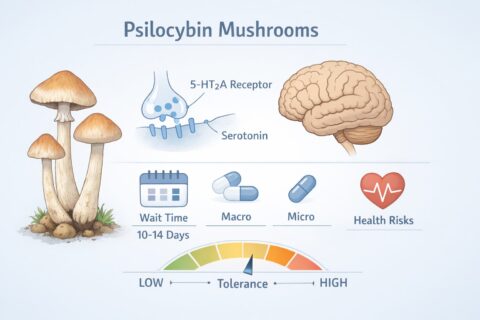
Tolerance builds up fast, but it also fades away over time. Most people feel it the strongest within the first 24 to 48 hours after a trip. That’s why trying to take mushrooms the next day usually doesn’t work well unless the dose is much higher, and even then, it often feels dull or “off.”
By the 7 to 14-day mark, most people’s brains have returned to normal. The serotonin receptors are back in place, and the body is ready to respond again like it did the first time. This is why many people who use magic mushrooms space their experiences out by at least a couple of weeks.
This next part might surprise you. If someone takes another classic psychedelic, like LSD or mescaline, the same kind of tolerance builds up, even though it’s not psilocybin. That’s because these substances also affect the same serotonin receptors. So if someone takes LSD today, they’ll likely have a higher tolerance to magic mushrooms tomorrow, even without taking mushrooms at all.
However, not all psychedelics work this way. For example, DMT and Salvia divinorum affect the brain differently and are processed much faster by the body. These usually don’t lead to the same kind of lasting tolerance.
Even though everyone’s brain has serotonin receptors, how someone experiences magic mushrooms can still vary based on a few key things:
Here’s something important to understand: psilocybin doesn’t work the same way as addictive drugs like nicotine, alcohol, or opioids. Those drugs activate the brain’s dopamine system, which creates cravings and habits. Psilocybin mostly avoids that system.
In fact, magic mushrooms tend to be self-limiting. Because tolerance builds so quickly, the body simply won’t react the same way if someone tries to use them again right away. And even more than that, many people describe the experience as so deep or intense, they don’t even want to do it again for a long time, sometimes months. That’s part of why researchers say it’s very unlikely for someone to become addicted.
Yes, you can build a tolerance to magic mushrooms, and it can happen after just one use. This is because of how psilocin interacts with your brain’s serotonin system. The tolerance is strongest in the first couple of days and usually fades within one to two weeks. Other psychedelics that use the same receptors, like LSD, can also affect your tolerance to mushrooms.
While many factors can influence how someone experiences mushrooms, including medication and dosage, the body has a built-in limit to how often it will respond. That’s part of why psilocybin isn’t considered addictive in the traditional sense.
Understanding how tolerance works can help people make informed and respectful decisions about these substances, especially as interest in psychedelics continues to grow in medical research and public discussion.

© 2025 All rights Reserved.
Rocket Mushroom Shop

Are You 18 Or Over?
By clicking 'Continue', you confirm that you are over 18 years old. By using this website, you agree to our terms of service.
2 Responses
wish you all the best
All the best