

Magic mushrooms have been used for centuries in different cultures, often for spiritual or healing reasons. Today, science is starting to explain what these mushrooms actually do to the brain. The main active ingredient is called psilocybin. But here’s the surprising part: psilocybin doesn’t do much on its own. The real changes in the brain come from what it turns into, psilocin.
Let’s explore how this works, what it does in the brain, and what scientists are learning about its effects, both good and bad.
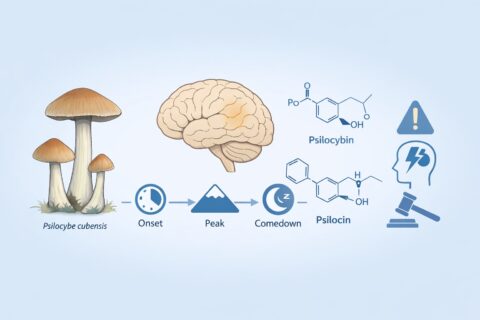
When someone eats a magic mushroom, their body doesn’t use the psilocybin directly. Instead, the liver changes psilocybin into another chemical called psilocin. This process is called conversion, and it’s what actually causes the effects.
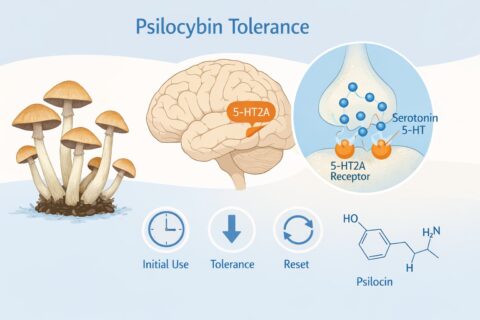
Psilocin looks very similar to a brain chemical we all have called serotonin. Serotonin affects mood, sleep, and how we feel overall. Because psilocin is shaped almost the same way, it can attach to some of the same brain receptors.
One of the main ones is called the 5-HT2A receptor, and it’s mostly found in the prefrontal cortex, the part of the brain responsible for thoughts, emotions, imagination, and decision-making.
Once psilocin locks into those receptors, the brain starts acting very differently than usual.
One of the biggest discoveries in recent research is how psilocybin affects something called the Default Mode Network (DMN). This is a group of brain areas that are very active when we’re thinking about ourselves, worrying, or stuck in our own thoughts. Scientists sometimes call it the brain’s “CEO” or the “orchestra conductor,” because it keeps everything in order and focused on usual patterns.
But in people with depression or anxiety, the DMN can be too active. It causes negative thought loops, going over the same worries again and again.
Psilocybin seems to turn down or even disrupt the DMN. A study from Washington University in 2025 described it like this: psilocybin takes the conductor off the stage. Without the DMN running the show, other parts of the brain start talking to each other in new ways.
This is why some people on psilocybin experience strange effects like synesthesia (seeing sounds or hearing colours) or a loss of the usual sense of self. The brain is working more like a jazz band than a classical orchestra, looser, more connected, and open to new patterns.
Another way to understand psilocybin’s effect is to picture a ski hill. If someone skis down the same path over and over, it creates deep ruts. Our brains do the same thing with thoughts, especially habits, fears, or negative thinking. We follow the same “tracks” every day.
Psilocybin seems to work like fresh snow on the hill. It smooths out those deep ruts, allowing the skier (your brain) to choose a different path.
In scientific terms, this is called neuroplasticity, the brain’s ability to change and grow. Psilocybin helps increase something called BDNF (Brain-Derived Neurotrophic Factor), which acts like fertilizer for brain cells. It also encourages synaptogenesis, the formation of new connections between brain cells.
This might be one reason why some people report long-lasting changes after only one session. The brain isn’t just temporarily changed, it’s actually reshaping how it works.
One of the most exciting things about psilocybin is how it’s being studied in the medical world. Clinical trials have shown that a single high dose of psilocybin, taken in a supervised setting with trained professionals, can reduce symptoms of depression for months, sometimes even a year.
This is very different from traditional treatments like antidepressants (SSRIs), which often have to be taken daily and may take weeks to work. Psilocybin seems to act faster and have longer effects, though more research is needed to fully understand why.
It’s not just depression. Research from 2025 at Penn Medicine suggests that psilocybin also affects brain circuits involved in chronic pain and clinical anxiety. Instead of “numbing” the brain like opioids, psilocybin acts more like a dimmer switch, turning down the sensitivity of certain pain and stress signals.
Because of this, scientists are studying whether psilocybin could be a new option for people who haven’t responded well to other treatments. It’s still early days, and these studies are happening in controlled, medical environments, not for everyday or casual use.
While psilocybin is being studied for its benefits, it’s important to talk about the risks, too.
The most common concern is a so-called “bad trip.” If someone takes psilocybin in a chaotic or unsafe setting, or if they’re feeling anxious before using it, they might experience strong panic, paranoia, or feel like they’re losing control. This can be scary and sometimes traumatic.
Another rare but real condition is called HPPD, Hallucinogen Persisting Perception Disorder. It means that someone might keep seeing visual “flashbacks” or light distortions long after the effects should have worn off. This is uncommon, but it has been reported.
Physically, psilocybin is considered non-addictive and doesn’t cause long-term harm to the body for most healthy people. However, it can temporarily raise blood pressure and heart rate. This makes it risky for people with heart conditions or high blood pressure.
Because of these risks, researchers and doctors stress the importance of set and setting, which means making sure the person is in the right mindset and environment, and ideally under professional supervision if used in any kind of clinical trial.
We’re still learning a lot about how magic mushrooms affect the brain. Studies are happening in Canada, the U.S., and around the world. Some researchers believe that psilocybin could one day be part of treatments for depression, PTSD, anxiety, or pain, but only in safe, legal, and carefully controlled settings.
It’s also important to remember that psilocybin is still a controlled substance in most countries, including Canada. Outside of specific medical or research settings, it’s illegal to sell or use. That’s why research is being done with care, and results are shared only after rigorous testing and peer review.
For now, what we know is this: magic mushrooms don’t just change how people see the world. They also change how the brain itself works, at least for a short time, and maybe, in some cases, for much longer.

© 2025 All rights Reserved.
Rocket Mushroom Shop

Are You 18 Or Over?
By clicking 'Continue', you confirm that you are over 18 years old. By using this website, you agree to our terms of service.
3 Responses
A really good blog and me back again.
Very good i like it
wish you best and best